At the time of writing, the design with the most votes (83) is an LED Matrix Tic-tac-toe game using an AVR ATtiny85 on a solderless breadboard.
Showing posts with label consumer electronics. Show all posts
Showing posts with label consumer electronics. Show all posts
Thursday, October 10, 2013
Atmel AVR Hero Consumer Electronic Design Contest
The Are You an AVR Hero? Contest kicked off at Maker Faire a few weeks ago. Maker Faire is over, but you can still enter you design until December 31, 2013. This is a Facebook contest and half of the judging criteria is public votes, so you want to enter early. The other criteria are quality of the idea, quality of the device design, and commercial potential. Here is a link to the official rules. Click here to vote on a design and click here to enter.
At the time of writing, the design with the most votes (83) is an LED Matrix Tic-tac-toe game using an AVR ATtiny85 on a solderless breadboard.
At the time of writing, the design with the most votes (83) is an LED Matrix Tic-tac-toe game using an AVR ATtiny85 on a solderless breadboard.


Monday, January 14, 2013
Renesas Offering Free Micruim RTOS
Commercial products using 32-bit RX and 16-bit RL78 MCUs can qualify for a free Micruim RTOS license until March 31, 2013. This can be uC/OS-II or uC/OS-III and middleware (TCP/IP, USB, File System), plus uC/GUI. The promotion is called 'The Power of 2' and is available in the Americas. See the video below for more information, it also mentions how NASA uses uC/OS-II on the Mars Rover.
The Micruim website just completed a major update, they now have free PDF books and example projects with registration. They are also offering free live training classes in Micrium's office in Florida.
The Micruim website just completed a major update, they now have free PDF books and example projects with registration. They are also offering free live training classes in Micrium's office in Florida.
Monday, January 7, 2013
Start-up Develops Wireless iPod Controller for Smartphones
A former client, Tau Cygnus, sent me a note that a prototype I helped develop is ready for production. The Cyborg dock makes use of an iPod and a smartphone (or tablet) to connect your audio system and to control it wirelessly. The free app works with Apple, Android, Kindle Fire and Nook devices. The iPod dock connects directly to your music system so there is no streaming or buffering of the audio. The app runs on your wireless phone or tablet to browse and control playback remotely. Visit www.cyborgdock.com for more details and see the video embedded below. There is currently a funding campaign at www.indiegogo.com/cyborgdock to help start production. In case you are wondering, I'm no longer working for Tau Cygnus and I'm not receiving any compensation for this post.
If you want to expand the capabilities of the Cyborg, "...we have opened up Cyborg for developers. An API
is provided so third party developers can customize Cyborg - the API is
provided for both Android and Apple platforms. Of course our base
station software that you helped with is under the GNU license, so that
is provided as well" (President of Tau Cygnus, Greg Smolinski). For my part, I reviewed the schematics and layout, performed the board bring-up (not too much smoke), ported the bootloader, and ported the Linux OS to the system. It looks like a lot of additional work has been put into this since those early prototypes were completed. When you contribute to a project like this, it is great to see the finished product. I hope it does well and people will enjoy using it.
Saturday, June 30, 2012
Google Reimagines the Development Board
The ADK 2012 platform is packed with innovation and usable code for Android accessory development.
They advertise that all of the code is open source and with a less restrictive license like BSD so you can include it in your products. Here are the main libraries:
All of this runs on the Atmel SAM3X ARM Cortex-M3 processor with 512kB flash, 100kB RAM, and bluetooth is provide by a Texas Instruments CC2564. There are also sensors for light, proximity, acceleration, magnetism, temperature, humidity, barometric pressure, and other toys like a capacitive slider and buttons, RGB LEDs including the 7 segment display, a transducer speaker, and an NFC tag.
For more info, here is the developer's guide from google Accesory Development Kit 2012 Guide. A little more info about the Arduino IDE (for an ARM processor) it uses on the Arduino blog.
The surprise at the end of the video is that an ADK 2012 was given to each attendee of this talk, and the device is not for sale (yet). If you really want one, try e-bay, currently the best price is an auction at $400 US. If are lucky enough to have one here is the Android app from google play.
They advertise that all of the code is open source and with a less restrictive license like BSD so you can include it in your products. Here are the main libraries:
- Bluetooth stack (BSD license) with libraries for RFCOMM, A2DP,L2CAP, SDP
- Multimedia library including an ogg player
- MicroSD SD/SDHC driver with FAT12/RAT16/FAT32
- USB Host stack with Android open accessory protocol implementation
All of this runs on the Atmel SAM3X ARM Cortex-M3 processor with 512kB flash, 100kB RAM, and bluetooth is provide by a Texas Instruments CC2564. There are also sensors for light, proximity, acceleration, magnetism, temperature, humidity, barometric pressure, and other toys like a capacitive slider and buttons, RGB LEDs including the 7 segment display, a transducer speaker, and an NFC tag.
For more info, here is the developer's guide from google Accesory Development Kit 2012 Guide. A little more info about the Arduino IDE (for an ARM processor) it uses on the Arduino blog.
The surprise at the end of the video is that an ADK 2012 was given to each attendee of this talk, and the device is not for sale (yet). If you really want one, try e-bay, currently the best price is an auction at $400 US. If are lucky enough to have one here is the Android app from google play.
Wednesday, January 11, 2012
CES 2012 Videos
If you want to see what is happening at CES, there is an official youtube channel for the 2012 CES conference where you can see booth interviews and attendee videos. Here is a video from OLogic showing a robot they call A.M.P. for Automated Music Personality. OLogic is a design house for toys and consumer electronics, the A.M.P. isn't for sale yet but has been shown for a few years as a showcase of their engineering abilities.
Friday, September 23, 2011
TI Low Cost eZdsp Dev Kit Special Offer
The TI C5535 eZdsp dev kit is now available for just $55 through Oct. 24 Dec. 31, 2011 (extended). Normally priced at $99, the kit demonstrates the low cost TMS320C553x ultra-low-power fixed-point DSP family which start at about $2 in production volumes. The kit features the TMS320C5535 DSP, an on-board emulator for debugging, USB 2.0 with free software framework for HID and audio class, Code Composer Studio IDE and eXpressDSP development software, the DSP/BIOS kernel, audio I/O connectors, headphone with mic, micro SD slot, a small 96x16 OLED display, pushbuttons and a 60 pin expansion connector.


The development board is supported by Spectrum Digital Incorporated. You can find all the documentation at the eZdsp5535 Support website. There you will find manuals, errata, schematics in pdf and orcad, gerbers, and layout info. You can also download software and information for booting over SPI (the board will also boot over SD card). An audio expansion board is listed, but only schematics and hardware information is provided at the time of writing.
According to the press release from TI, the included code composer studio is a full-featured version normally priced at $495. I expect the software tools will be limited to this processor family, but that would still be a good value.
Friday, February 11, 2011
Google Honors Edison With Doodle and Datacenters
If you visit Google today you will see a doodle commemorating Thomas Edison's 164th Birthday. I found this short bio of Edison and his invention factory from RadioElectronics.com a little more readable than Edison's Wikipedia entry.

It is interesting that the DC power distribution that Edison advocated is now making inroads in data centers to save energy. This IEEE Spectrum article, 'Direct Current Networks Gain Ground,' has the alternate title 'Edison Vindicated' in the print version of the magazine. Google utilizes DC power in its 'Manhatten Project' data center design revealing this big energy saving secret in 2009. It will be very interesting to see what affect a DC power network will have on embedded system designs It has the potential to make consumer electronic devices cheaper and easier to use, eliminating the need for manufacturers to provide, and for consumers to carry around, a wall wart or black brick power supply.
Tuesday, January 11, 2011
Consumer Electronics Conference Seeks Startup Prototypes
"Technologies and Applications for Connected Consumers" is the theme for the 34th IEEE Sarnoff Symposium being held May 2011 in Princeton, New Jersey. Free exhibition space is offered to startups and students that can demonstrate consumer prototypes and applications. Cash prizes will be offered for the best exhibits.
Monday, August 23, 2010
Consumer Devices Use Adobe Flash With Open Screen Project Technology
The Open Screen Project was created by Adobe to increase design-in of the Adobe Flash Player on consumer devices like cell phones. Many companies are partners in the project including ARM, Cisco, Intel, Google, and Texas Instruments. Microsoft and Apple are not on the list probably because they have competing technologies. Intel subsidiary Wind River recently joined the initiative. Benefits to membership include a royalty-free license to use flash device run-times, and permission to use the Open Screen Project and Flash logo.
This video shows a Flash player running on an Android phone.
There is an Open Screen Project Fund sponsored by Adobe and Nokia. It awards grants to develop Flash applications that run on Nokia devices.
This video shows a Flash player running on an Android phone.
There is an Open Screen Project Fund sponsored by Adobe and Nokia. It awards grants to develop Flash applications that run on Nokia devices.
Wednesday, July 28, 2010
TI $4.30 Microcontroller Development Kit Sold Out Fast
The Texas Instruments wiki for the MSP430 LaunchPad (MSP-EXP430G2) reports unprecedented demand for the LaunchPad development tool. TI's servers were extra busy and stock was sold out within the first few days of availability. For $4.30 plus shipping you get a development board with debug capability, a few MSP-430 devices to program and a mini-USB cable.


Friday, July 23, 2010
Microsoft Forms Closer Partnership with ARM
Press Release: Microsoft Licenses ARM Architecture - ARM
Microsoft supports ARM in a wide range of products.
There is wide speculation about this new agreement between Microsoft and ARM.
EETimes
Network World
eWEEK.com
Microsoft supports ARM in a wide range of products.
There is wide speculation about this new agreement between Microsoft and ARM.
EETimes
Network World
eWEEK.com
Saturday, June 12, 2010
Leapster's Latest Handheld ARM-Linux Gaming Platform
Leapfrog is promoting the Leapster Explorer as an all in one platform for gaming, e-books, videos and educational content. It can also function as a camera and video recorder if you purchase a camera accessory. It has an ARM processor, 512MB of flash storage, a 420x420 pixel 3.2 inch touch screen, 3D graphic processing, and a flash engine for applications and video. The image below is from an explorer review by Nicole Tanner at whattheyplay.com

The release of this new product seems related to the news that Leapster is discontinuing the Didj, another ARM processor based Linux gaming system that has been on the market only 2 years. The Didj announcement isn't going over well with parents on the Leapfrog community forum. Leapster2 owners are also upset that the cartridges will not be compatible with earlier products.

The release of this new product seems related to the news that Leapster is discontinuing the Didj, another ARM processor based Linux gaming system that has been on the market only 2 years. The Didj announcement isn't going over well with parents on the Leapfrog community forum. Leapster2 owners are also upset that the cartridges will not be compatible with earlier products.
Saturday, April 17, 2010
Musical Instrument Amplifier Embeds a PC Inside
Orange Amps' new OPC, a combined PC and Amplifier is designed for Guitar, Keyboard, microphones and more. It includes WIFI and Guitar Effects software and will be available in June 2010. This could have a lot of uses for musicians, you could pair this with a USB MIDI controller for drums, keyboard, or wind instruments. It will be a nice compliment to USB programmable guitar effects. If successful, it will create more demand for PC connectivity in audio electronics.
Wednesday, April 14, 2010
Camera 2.0 Open-Source Digital Camera Project
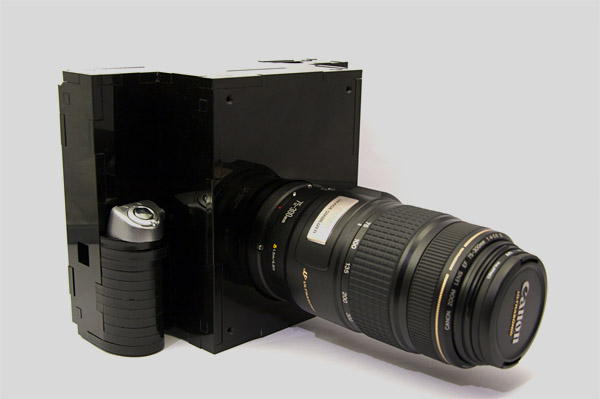 As part of the Camera 2.0 project, researchers at Stanford have developed the Frankencamera shown here, "an open-source camera platform that runs Linux, is fully programmable (including its digital signal processor) and connected to the Internet, and accommodates SLR lenses and SLR-quality sensors. Our current prototype...is constructed from off-the-shelf parts, in some cases borrowed from dead cameras. It's also ugly - hence the name."
This open-source project is being developed to help researcher gain more control of camera processing. Another open-source camera project, the Canon Hack Development Kit, allows some control through a series of enhancements, but according to the Frankencamera FAQ: "you can't use them to reprogram the camera's pre-capture sequence (metering and focusing) or to replace its post-processing algorithms (demosaicing, denoising, sharpening, white balancing, tone mapping, etc). The Frankencamera fills this gap"
The brains of the Frankencamera include a TI OMAP3 processor, an Aptina MT9P031 image sensor and an Elphel 10338 sensor board.
If the popularity of the CHDK is any indication, the Frankencamera is sure to have a cult following.
Wednesday, March 31, 2010
Low Cost CPLD Development Kit
 The Lattice ispMACH 4000ZE Pico Dev Kit is on sale

Friday, February 12, 2010
NXP Microcontroller Design Challenge
The NPX LPC1100 Design Challenge just started and offers contestents a free NXP LPCXpresso development platform ($29 value), if your design is approved by the judges. If your design is not approved, you can still participate and win prizes by rating design entries and giving feedback.
 The LPCXpresso is unique in that it can be used as a stand alone JTAG debugger by cutting the traces between the LPC-Link and the Target portions of the board. The target section for the contest includes an LPC1114 (LPC1343 shown in the picture). The processor architecture is the new ARM Cortex-M0, designed to be small and energy efficient for battery-powered devices. The development environment is an Eclipse-based LPC IDE from Code Red Technologies, its free but limited to 128KB downloads. The prizes for the contest are given as Apple Gift Cards of up to $3000.
 The LPCXpresso is unique in that it can be used as a stand alone JTAG debugger by cutting the traces between the LPC-Link and the Target portions of the board. The target section for the contest includes an LPC1114 (LPC1343 shown in the picture). The processor architecture is the new ARM Cortex-M0, designed to be small and energy efficient for battery-powered devices. The development environment is an Eclipse-based LPC IDE from Code Red Technologies, its free but limited to 128KB downloads. The prizes for the contest are given as Apple Gift Cards of up to $3000.
Wednesday, December 23, 2009
TI Releasing Watch for Microcontroller Development
 Amazing new platform for development, eZ430-Chronos Wireless Watch Development Tool. Introductory video here and assembly/disassembly video here. Not available at the time of writing but will be available for purchase for $49 at TI eStore.
Wednesday, October 21, 2009
Barnes and Noble Announces Nook
Barnes and Noble has released details and some specifications of its new electronic reader, Nook.
Tuesday, October 20, 2009
Barnes and Noble will release electronic reader
Gizmondo and the Wall Street Journal are reporting that Barnes and Noble will release the Nook, an electronic reader to compete with Amazon's Kindle. It's reported to sell for $259, and run Google's Android OS. Gizmondo has pictures but no specifications yet.
Tuesday, September 15, 2009
Texas Instrument's OMAP and Inexpensive BeagleBoard Excel with Embedded Linux

Attending the TI Tech Days Toronto 2009, I was impressed with the capabilities of the BeagleBoard, an OMAP3530 single board computer that sells for only $149. It was on display serving video to a tiny DLP projector that is also available as a development kit from TI.
The BeagleBoard is a reference platform as well, with all schematics, gerbers and even design files available online. This allows third-parties like TinCanTools to develop a peripheral add-on board an an adaptor for their USB-JTAG board to support the BeagleBoard.
The OMAP is a great platform for Embedded Linux development. The OpenEmbedded project, the Angstrom distribution, and Android all have been ported to the OMAP, and there is a great community of BeagleBoard Linux users and a wealth of information online at BeagleBoard.org. In addition to the BeagleBoard, there are OMAP development boards from gumstix and Logic. Each of these boards also have embedded Linux distributions and online resources for developers.
At the Conference, the room was full for the OMAP embedded Linux presentation by Nuvation, and it could have lasted much longer if time permitted. Developers had many questions on each slide and the presenter had to rush to finish. You can tell that there are a lot of products in development with the technology or at least considering OMAP and Embedded Linux as a solution.
There were a number of development companies at the conference (including Aaron Clarke Consulting) offering support for OMAP development. bSQUARE was giving away copies of Microsoft's Windows Embedded CE Evaluation Kit that also runs on the BeagleBoard. They support both WinCE and Embedded Linux development. They are headquartered in Bellevue, Washington with offices around the world including one near me in Rochester, NY. bSQUARE, who aquired Vibren Technologies in 2005, also offers an embedded flash for Linux and porting services for Adobe Flash Lite.
You can see the BeagleBoard in action either at one of the remaining TI Tech Days or at the Embedded Systems Conference in Boston. TI will have a number of workshops featuring the BeagleBoard including Android development.
Subscribe to:
Posts (Atom)


